

Why does SASAL sometimes advise against expanding abroad?

In this interview, SASAL’s Japanese founder discusses her own experience and approach to client support. Comments about culture and nationality are presented as the speaker’s perspective, rather than characteristics of every person or company. The audience and support discussed are not limited to Japanese companies; read the interview as one perspective on understanding the people and businesses involved.
Interviewer
Today, we are joined by Ms. Sakamoto, who leads SASAL. We would like to learn about what kind of company SASAL is and why it arrived at its current form. To begin, could you please give us a brief introduction to the company?
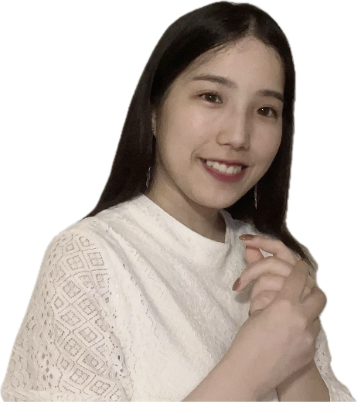
Ms. Sakamoto
Thank you for the introduction. My name is Yurino Sakamoto from SASAL. SASAL operates a Cross-Border Business Infrastructure. We support the international expansion of companies in English-speaking markets, primarily centered around New York. For Japanese companies in Japan, we support their expansion from Japan into overseas markets. Thank you for having me today.
Chapter 1: The Origins of SASAL — Starting as a Strategy Consultancy and Confronting Operational Bottlenecks on the Ground
Interviewer
It is written that SASAL originally started as a strategy consultancy. Has the thinking behind the company remained unchanged since then?
Ms. Sakamoto
At its core, it has not changed. SASAL started in 2022 as a strategy consulting firm, helping clients with both strategy and execution for complex challenges. However, what became painfully clear as we continued supporting clients was that there is a much deeper gap than most people imagine between “having a strategy” and “actually moving a business forward.” The materials are prepared, the meetings conclude, yet in the end nothing advances. It is not that anyone is at fault; rather, structural conditions often create a situation where progress cannot be made. We came to feel that simply delivering the next report and finishing there, without addressing that reality, could not provide genuine value to clients.
What I repeatedly saw in the field was not so much companies being indecisive, but situations where there were plenty of reasons to hesitate. Information is lacking, internal interests are complex, the external environment keeps changing, and above all, it often becomes unclear who will ultimately take responsibility and move things forward. That is why SASAL does not begin by providing answers. We begin by organizing the questions. Which market should be targeted? What approach offers a path to success? When should action be taken? Or would it be better not to act right now? We turn questions that have not yet been articulated into questions that can support decision-making. The value of SASAL becoming involved from the “still uncertain stage” lies precisely there.

Chapter 2: We Do Not Say “You Should Expand Overseas” — Supporting Even the Decision Not to Expand
Interviewer
One aspect of SASAL that stood out to me was that it does not forcefully recommend international expansion and may even suggest focusing domestically depending on the situation. Why are you able to state that so clearly?
Ms. Sakamoto
I believe this comes down to integrity in client support. At first glance, it may seem strange that a company that supports international expansion sometimes does not recommend it. However, SASAL clearly states in its mission that it is not “a company that sells overseas expansion,” but “a company that increases corporate value.” Therefore, if expanding overseas is the right timing to increase a company’s value, we encourage it. Conversely, if strengthening the domestic foundation would create more value at that point, that is what we recommend. In reality, global market conditions are constantly changing, and what a company should do now varies completely depending on its stage. Ignoring the situation and expanding overseas can sometimes be recklessness rather than courage..
What clients truly want is not overseas expansion itself, but the ability to make the right decisions. SASAL wants to create an environment where clients can face their current reality and choose their next move. Sometimes that result is “expand overseas,” and other times it is “strengthen the domestic business.” I believe that being honest about that is what builds long-term trust.
Chapter 3: Why an Ecosystem? — Turning “Problems That One Company Cannot Solve” Into Solvable Challenges
Interviewer
It is stated that SASAL evolved into a “Cross-Border Business Infrastructure” in 2025. While the term “JV” appears there, rather than focusing on joint ventures themselves today, I would like to ask why you chose an ecosystem model.
Ms. Sakamoto
That is exactly the essential point. The reason SASAL evolved into an ecosystem framework in 2025 was the reality that strategy alone is not enough. As stated in SASAL’s CEO message, global markets have come to demand more than strategy. That is why we shifted from “strategy to co-creation.”
We adopted the ecosystem model because when companies seek to accomplish something across boundaries, what they need is not support at isolated points but support across an entire landscape. When a company considers overseas expansion, it needs more than market analysis. It needs an understanding of local realities, practical operational connections, the building of credibility, the design of ongoing operations, and clarity around whom to build relationships with and what kind of relationships to build. Unless these elements work together, the business does not move forward. That is why SASAL serves as the hub, helping clients organize uncertainty from an early stage and, once the direction becomes clear, working with companies within the ecosystem to provide seamless support from strategy through execution.
What I do not want people to misunderstand is that the ecosystem is not a referral network. Referrals are only one part of it. By creating an ecosystem, we establish a structure in which clients can access the functions they need when they need them. Because that design exists, long-term support becomes possible. I believe the stage-based approach advocated by SASAL is precisely the institutionalization of this philosophy..
The client’s situation and decision
- Listen firstGoals, constraints and practical obstacles
- Include the option not to expandExpansion is not an end in itself
- Connect expertiseAddress problems one company cannot solve alone
- Build working relationshipsWarmth and professional delivery
A summary of the approach to client support described in the interview.
Chapter 4: Our Approach to Client Support — Why Listening Is the First Form of Value
Interviewer
SASAL’s mission includes the idea of wanting to understand client needs and deliver genuine value. There are many support firms out there, so why does SASAL emphasize this point?
Ms. Sakamoto
I believe that the first requirement for a support company to create value is the ability to listen. SASAL’s mission states that we want to discuss and listen to client needs in order to provide true value. This is not an idealistic concept; it is a conclusion drawn from practical experience. Every company’s situation is genuinely different. Even when they use the same term, “overseas expansion,” their growth stage, financial resources, organization, strengths, and constraints are all completely different. That is why applying a “general success pattern” often misses the mark. When support efforts fail, it is usually because the initial assumptions were off.
The first thing SASAL does is not make flashy proposals but carefully listen to the situation. What are they afraid of? How far do they want to go? What can they not give up? What are they willing to change? We gradually put into words what clients themselves have not yet articulated. That process becomes the foundation for decision-making. That is why SASAL says, “Please consult with us,” and why we state that we do not push overseas expansion more than necessary. By not deciding the direction for clients at the very entrance to the conversation, we ultimately help protect their corporate value.
Chapter 5: The World SASAL Aims to Create — Making Places Where Value Emerges Across Boundaries a Matter of Course
Interviewer
Please tell us about your vision for the ecosystem and, in other words, what kind of world SASAL hopes to create going forward.
Ms. Sakamoto
SASAL’s Vision expresses a commitment to contributing to the world. It reflects the belief that value is not determined by the size of a country and that what matters is what one wants to contribute to society, regardless of where business is conducted. The world I want to create is one in which crossing borders is no longer considered a special challenge. When you cross borders, there are many differences in language, culture, systems, and business practices. However, those differences are not only barriers; they are also sources of co-creation. When different entities come together, they can create value that no single company could achieve alone. I believe the CEO message’s statement that “the future expands through co-creation” captures that idea.
That is why SASAL places greater emphasis on creating an environment where trust can accumulate over the long term than on increasing the number of one-off projects. The stage-based design, which begins with registration and allows deeper engagement when needed, also comes from the philosophy of growing together with clients. Ultimately, the state that SASAL can be proud of is not whether SASAL took center stage, but whether clients are able to make decisions, whether their businesses continue, and whether their corporate value increases. What SASAL aims to build is an ecosystem in which that kind of “normal” outcome accumulates.
Chapter 6: Working Primarily in English-Speaking Markets While Remaining Involved as a Japanese Professional
Interviewer
SASAL works extensively with companies and founders in English-speaking markets, while also supporting Japanese companies. How do you think about that balance?
Ms. Sakamoto
As a starting point, the primary focus of SASAL’s activities is the English-speaking world. Our day-to-day interactions are mainly with companies, founders, and professionals in English-speaking markets. Our headquarters are in New York, and I myself currently reside in London. As an ecosystem, we do not limit participation by nationality. Even so, I have no intention whatsoever of trying to erase the fact that I am Japanese. On the contrary, I actively make use of it when appropriate.
Working in English-speaking markets, I feel there are subtle things that seem out of place and nuanced emotions that I can recognize precisely because I am Japanese. Especially in projects involving Japanese companies or Japanese founders, I can understand not only the logic and conditions involved but also the unspoken anxieties, hesitations, and reasons behind their caution. Whether that understanding exists or not can significantly affect the quality of support. Therefore, while SASAL’s primary focus is the English-speaking world, when necessary we provide very careful support in Japanese and with a Japanese sensibility. It feels less like ‘selling services for the Japanese market’ and more like ‘not holding back from contributing in ways that are possible because I am Japanese, whenever needed.’
Chapter 7: How to Approach Japanese Identity While Working Abroad
Interviewer
When operating internationally, are you conscious of your identity as a Japanese person?
Ms. Sakamoto
Very much so. However, that does not mean trying to be deliberately Japanese. When living abroad, Japanese people are often perceived as “polite,” “serious,” “reliable in keeping promises,” and “not overly expressive with emotions.” These are a kind of stereotype, but in reality there are many situations where they function as underlying assumptions.
I try not to reject those impressions. In fact, I make use of them. The perception that Japanese people are “reliable,” “unlikely to betray trust,” and “careful in their thinking” can be a major strength in long-term partnerships. At the same time, overseas, there is also a tendency for Japanese people to be misunderstood as “not expressing their opinions” or “being slow to make decisions.” Therefore, while grounding myself in Japanese qualities such as attentiveness and sincerity, I make a conscious effort to clearly state my position and express my judgments when necessary.
In other words, while accepting being Japanese as a given, I consciously compensate only for the weaknesses that Japanese people are often prone to. I am always mindful of maintaining that balance. This approach also influences SASAL’s style itself.
Chapter 8: How Japanese People Are Viewed Overseas and How We Engage with Japanese Companies
Interviewer
How do you feel Japanese people and Japanese companies are perceived by overseas companies and investors?
Ms. Sakamoto
To be candid, I think Japanese people and Japanese companies are entities that are easy to trust but difficult to understand. They are highly regarded for keeping promises, maintaining quality, and thinking with a long-term perspective. However, the reasons behind their caution and why they do not immediately reach conclusions are often not understood.
That is why when SASAL supports Japanese companies, we focus not only on helping them adapt internationally but also on translating the Japanese side’s way of thinking. This is not language translation; it is the translation of decision-making logic and culture. For example, we properly explain to overseas counterparts why a Japanese company needs to take a proposal back for consideration or why internal consensus is important. By doing so, perceptions can shift from seeing Japanese companies as “slow” to understanding that they are acting responsibly as organizations.
Because I have a Japanese perspective, I understand what needs explanation and what can be understood without explanation. That role is one of the major reasons SASAL supports Japanese companies while operating in English-speaking markets.
Chapter 9: Balancing Warmth and Professionalism
Interviewer
You mentioned the idea of providing support warmly. Is that something you consciously focus on?
Ms. Sakamoto
Very much so. However, that does not mean accepting everything. When supporting Japanese companies and Japanese founders, it would be easy to stop at saying, “I understand,” or “That sounds difficult.” But that does not move things forward. What SASAL aims for is to understand people’s feelings while also clearly communicating reality where necessary.
Japanese people are a minority overseas. There are times when that puts them at a disadvantage, and the differences in language and culture can be draining. That is why I believe having someone you can feel at ease with is important. At the same time, when you step onto the international stage, there will inevitably be situations where ambiguity is not acceptable. For SASAL, “warmth” means accompanying clients while understanding both of those realities.
Chapter 10: Working Globally Without Erasing the Fact That You Are Japanese
Interviewer
Finally, if you have a message you would like to share about working abroad as a Japanese person and supporting companies, please do.
Ms. Sakamoto
Some people view being Japanese as a handicap that must be overcome when working internationally. I do not see it that way. Being Japanese can be a significant strength depending on how it is used. Attentiveness, sincerity, perseverance, and a long-term perspective—these qualities may not be flashy in the short term, but they are extremely powerful when it comes to building trust.
SASAL’s activities are primarily focused on English-speaking markets, but at the same time, I am pleased that, as a fellow Japanese person, I can contribute to Japanese companies. I believe there are things I can share precisely because I have walked this path myself. As a fellow Japanese person, I hope to help reduce the risks associated with overseas expansion for Japanese companies and contribute to enhancing their corporate value in the future.
Interviewer
This concludes the interview. Thank you very much for taking the time to speak with us today.
Ms. Sakamoto
Thank you as well. And thank you to everyone who took the time to read this article.