

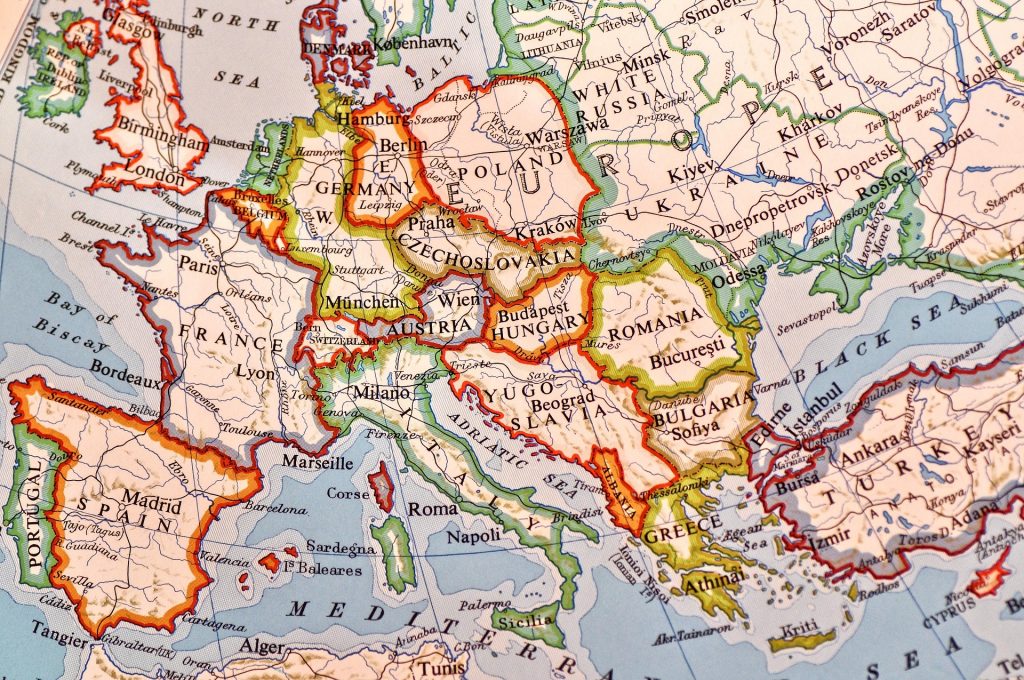
Entering the European market is no longer a question of whether demand exists, but how a company designs its entry to capture value while managing regulatory, organizational, and execution risk. The conclusion is clear: success in Europe depends less on choosing the “right country” and more on choosing the right entry architecture—governance model, decision rights, and operating scope—aligned with the EU’s integrated yet fragmented reality. This article explains why treating Europe as a single market is both true and misleading, breaks market entry into concrete decision components (mode, control, incentives, and compliance), and challenges the common assumption that full ownership is always superior. Readers gain a practical framework, data-backed insights, and decision checklists to design an entry strategy that scales across borders without overcommitting capital or control.
“Europe is one market”—so why do so many entries fail?
Europe represents one of the largest economic blocs in the world, with approximately 450 million consumers and a combined GDP exceeding USD 16 trillion [1]. On paper, the EU Single Market allows free movement of goods, services, capital, and people. Yet market entry failure rates for foreign firms remain high, particularly among mid-sized companies expanding from Asia or North America [2].
The core problem is not market attractiveness. It is entry design. Companies underestimate internal complexity—decision rights, incentive alignment, and governance—while overestimating the benefits of legal harmonization.
Breaking Europe market entry into decision components
A useful way to think about Europe entry is not “which country first,” but “which decisions must be centralized, and which must be localized.”
Key components include:
-
Market access logic
The EU Single Market allows one legal entry point, but consumer behavior, labor rules, and distribution structures vary widely by country [3]. -
Entry mode
- Wholly owned subsidiary
- Joint venture or strategic alliance
- Acquisition
- Distributor or agent model
-
Control vs. flexibility trade-off
Higher ownership increases control but reduces optionality in an uncertain regulatory and demand environment. -
Regulatory exposure
EU-wide rules (competition law, GDPR, product standards) coexist with national enforcement and interpretation [4].
A reframing “twist”: Europe as a regulatory platform, not a sales region
The common assumption is that Europe entry is about accessing customers. A more powerful framing is to see Europe as a regulatory and standards platform.
EU regulations often become de facto global standards in areas such as data protection (GDPR), product safety (CE marking), and sustainability disclosure [5]. Companies that design their European operations as a compliance and standards hub can leverage this capability globally.
This reframing changes entry priorities:
- Compliance capability becomes a strategic asset.
- Early investment in regulatory intelligence reduces downstream costs.
- Joint ventures with local compliance-heavy partners become more attractive than full ownership.
Evidence from data: why structure matters
- The EU accounts for around 14–15% of global inward FDI stock, making it one of the top destinations worldwide [6].
- However, UNCTAD data shows increasing scrutiny of foreign investments, particularly in technology, infrastructure, and data-related sectors [7].
- The EU FDI Screening Regulation, effective since 2020, allows member states to review foreign investments for security and public order risks, even when transactions are minority stakes [8].
Implication: entry structures that allow staged investment or shared control reduce regulatory and political risk.
Mini-cases from practice
Case 1: Japanese manufacturing firm (automotive components)
A mid-sized Japanese supplier entered Germany via full acquisition. While production scaled successfully, labor rigidity and works council negotiations slowed product redesign cycles. A later expansion into Eastern Europe used a JV model with a local partner, cutting time-to-market by 30% (company disclosures; METI case references) [9].
Case 2: US SaaS company
Rather than building sales teams in multiple countries, the firm established an Irish subsidiary focused on compliance, data hosting, and contracting. Local resellers handled sales. This reduced fixed costs and accelerated pan-European coverage (OECD digital trade examples) [10].
Organizational design: the hidden success factor
Europe entry fails less often due to poor strategy than poor organizational plumbing.
Critical design questions:
- Who owns pricing decisions: HQ or country managers?
- How are country P&Ls measured when customers are cross-border?
- Are incentives aligned to expand regionally rather than protect national silos?
A simple comparison:
Model              | Speed | Control | Regulatory Risk | Scalability
-------------------|-------|---------|-----------------|------------
Wholly owned       | Medium| High    | High            | Medium
Joint venture      | Medium| Shared  | Medium          | High
Distributor model  | High  | Low     | Low             | Medium
Actionable implications
- Design Europe entry as a portfolio of options, not a single bet.
- Separate compliance, governance, and market-facing roles early.
- Use joint ventures or alliances as learning vehicles, not compromises.
- Invest in regulatory intelligence as seriously as sales capability.
Decision Checklist
- Is Europe treated as one P&L or multiple national units?
- Which decisions must remain at HQ?
- What regulatory capabilities are required on day one?
- Does the entry mode allow staged capital commitment?
- Are incentives aligned across countries?
- How will GDPR and data localization be handled?
- Who owns key customer relationships?
- How easily can the structure be exited or restructured?
- Are local partners selected for access or governance strength?
- How will success be measured in the first 24 months?
- Is there a clear escalation path for regulatory issues?
- Does the structure support future acquisitions?
- Are labor and employment risks understood country by country?
FAQs
Q1. Is Europe still attractive for new entrants despite regulation?
Yes. The EU remains a top FDI destination, but returns depend heavily on entry structure and compliance readiness [6].
Q2. Which country is best as a first entry point?
There is no universal answer. Ireland, the Netherlands, and Germany are common hubs due to language, tax transparency, or industrial depth, but choice should follow operating logic, not headlines [3].
Q3. Are joint ventures risky in Europe?
They can be, but data shows they reduce regulatory and political exposure when governance is clearly defined [7].
Conclusion
Europe market entry is not a geography problem—it is a design problem. Companies that move beyond simplistic country selection and instead architect governance, incentives, and compliance from the start gain durable advantages. The winners are not those who rush in with maximum ownership, but those who treat Europe as a learning system and regulatory platform, scaling control only after uncertainty is reduced.
Sources
[1] Eurostat, EU GDP and population statistics
https://ec.europa.eu/eurostat
[2] OECD, International Business Dynamics
https://www.oecd.org/investment
[3] European Commission, Single Market factsheets
https://single-market-economy.ec.europa.eu
[4] European Commission, Competition and Internal Market rules
https://ec.europa.eu/competition
[5] European Commission, GDPR overview
https://gdpr.eu
[6] UNCTAD, World Investment Report
https://unctad.org
[7] UNCTAD, Investment Policy Monitor
https://unctad.org/investment-policy-monitor
[8] European Commission, EU FDI Screening Regulation
https://trade.ec.europa.eu
[9] METI Japan, Overseas Business Case Studies
https://www.meti.go.jp
[10] OECD, Digital Trade and Market Entry
https://www.oecd.org/digital